RetailTerminal
Retail Trading Analytics & Education1. Getting Started
Welcome to the starting point of our academy. You can jump directly to the desired section using the links below:
Warning
Risk Warning: Trading financial instruments, CFDs, and currencies involves high risk and is not suitable for every investor. A large percentage of retail investor accounts lose money when trading CFDs. Make sure you fully understand the risks involved and always begin within our academy on a risk-free demo environment before considering trading with real money.
Choosing a broker
When starting out with trading, choosing the right broker is one of the most important decisions you will make. Within our academy, we assume that you start with a demo account. Only after you have proven over an extended period that you can trade consistently and profitably using a tested system should you consider making the transition to a live account.
Nevertheless, it is essential to familiarize yourself with the market now and understand how brokers operate. After all, your broker is the partner through whom you will eventually enter the market—once backed by proven results—and their terms, conditions, and fees can directly impact your returns. To make a well-informed decision, understanding the following concepts is key. We have categorized them into three sections: Trading Terms, Costs, and Broker Types & Safety.
1. Trading Terms
These concepts form the foundation of how you place orders and manage positions in the financial markets.
- CFDs (Contract for Difference): A financial derivative that allows you to speculate on the rising or falling prices of an underlying asset (such as stocks, commodities, or currencies) without owning the actual asset. You effectively enter into a contract with the broker based on the price difference.
- Leverage: A tool that enables you to control a larger position with a small initial margin deposit. For example, a leverage ratio of 1:30 means that every €1 you deposit is 'amplified' by the broker to €30 in purchasing power. This magnifies both your potential profit and your risk.
- Margin: The collateral required in your account to open and maintain a leveraged position. It is the amount of money temporarily 'held' by the broker as long as your position remains open.
- Pips: The smallest price unit by which a currency pair or instrument can change (usually the fourth decimal place, e.g., 0.0001). It helps traders measure profits and losses.
- Lots: The standardized unit measuring transaction volume. One standard lot usually equals 100,000 units of the base currency. For beginners, mini-lots (0.1) and micro-lots (0.01) are often available to trade with smaller capital requirements.
2. Costs
Trading is not free; brokers generate revenue through various services. It is crucial to understand what you are paying for.
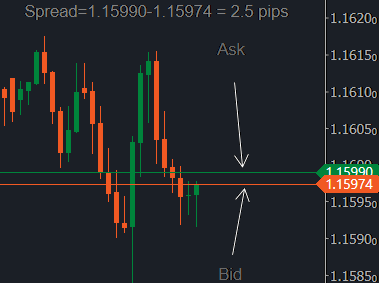
- Spread: The direct difference between the bid price (selling price) and the ask price (buying price) of a financial instrument. Think of the spread as the 'entry fee' or transaction cost paid immediately upon opening a position; you always start a trade at a slight deficit because you buy at the ask price and sell at the bid price. A tight (low) spread is advantageous for active traders.
- Commission: A fixed fee or percentage charged by some brokers (especially ECN brokers) per lot traded or per transaction, on top of the spread. Brokers offering lower spreads often charge a commission, whereas 'Market Maker' brokers typically absorb their costs into a wider spread (without separate commission fees). Calculating the combined cost of spread and commission per trade is essential.
- Swap (or Overnight Fee / Rollover): The fee charged (or interest earned) by a broker when holding a CFD position overnight into the next trading day. Because CFDs involve borrowed funds (leverage) or execution via the broker, you are effectively borrowing capital or currency overnight. The swap rate depends on the interest rate differential between the two currencies or instrument asset classes, as well as whether your position is 'long' (buy) or 'short' (sell). For swing traders holding positions over days or weeks, these financing costs can accumulate significantly.
3. Broker Types & Safety
Not all brokers operate the same way, and levels of investor protection vary between providers.
- ECN (Electronic Communication Network): A type of broker that routes your buy and sell orders directly to a global network of liquidity providers (such as major tier-1 banks). As a result, you often benefit from tight spreads, though a fixed commission per trade is usually applied.
- Market Maker vs. STP: A Market Maker acts as the counterparty to your trade (effectively creating the market for you). An STP (Straight Through Processing) broker passes your orders directly through to the real market without dealing desk intervention.
- Regulation (Licenses): Official regulatory oversight governing a broker (e.g., AFM in the Netherlands, FCA in the UK, or CySEC in Cyprus). Regulated brokers must adhere to strict legal standards, protecting your rights as a consumer.
- Segregation of Funds (Segregated Accounts): The principle requiring brokers to keep client funds strictly separate from company operational funds. Should the broker face insolvency, creditors cannot claim client funds.
- Negative Balance Protection: A protective measure (mandatory within the EU for retail traders) ensuring your account balance can never drop below zero due to severe market volatility. You can never lose more money than your total account deposits.
- No Central Exchange (Decentralized Market): Unlike stock markets (such as Euronext or NYSE), the forex and CFD market operates without a central physical exchange. It is an Over-The-Counter (OTC) global network of banks, financial institutions, and brokers. Because there is no single central exchange, your broker determines which network of liquidity providers (major international banks) fills your orders.
- Why Larger Brokers Often Offer Better Spreads: Due to the decentralized nature of the market, pricing depends heavily on the trading volume a broker processes. Major brokers handling tens or hundreds of thousands of active clients route massive volumes to the world's largest liquidity providers. Consequently, they can negotiate superior pricing, resulting in lower spreads for you as a trader. Smaller brokers often lack negotiating power and must maintain wider margins to remain profitable.
Summary: How to Choose a Broker
- Safety & Regulation (Priority 1): Always choose a broker regulated by a reputable financial authority (e.g., FCA, CySEC, AFM). Ensure negative balance protection and segregated client accounts apply.
- Transparency & Costs: Calculate total trading costs: look beyond spreads and evaluate commissions per lot as well as swap rates.
- Execution & Liquidity: Larger brokers generally provide tighter spreads due to higher trading volumes with institutional banks.
Choosing software
Reliable software is required to analyze markets and execute trades. Depending on your broker and trading style, you can choose from several leading platforms:
- MetaTrader 4 / 5 (MT4 / MT5): The global benchmark for forex and CFD trading. Offers extensive technical analysis capabilities, custom indicators, and automated trading (Expert Advisors). MetaTrader 4 / MetaTrader 5.
- cTrader: A modern, intuitive trading platform specifically built for ECN brokers. Renowned for lightning-fast execution speed, a sleek interface, advanced order management tools, and transparent Depth of Market (DoM) insight. cTrader.
- TradingView: A web-based platform widely acclaimed for its superior charting tools, social network, and powerful Pine Script language for developing custom indicators. Many brokers now support direct trading integration via TradingView. TradingView.
- Proprietary Platforms: Many brokers also provide custom web traders or mobile apps tailored for beginner ease-of-use.
What else is important to know before you start
Before actively entering the market and placing trades, understanding the core building blocks of financial markets is essential. Trading is more than just drawing lines on a chart; it requires a strong foundational knowledge of financial instruments, market dynamics, and risk management:
1. Financial Instruments
In the financial markets, you can speculate across various asset classes, each exhibiting distinct volatility profile Characteristics:
- Forex (Currencies): The largest and most liquid financial market globally, where currencies are traded in pairs (such as EUR/USD).
- Indices: Baskets representing the performance of top publicly traded companies within a specific country or region (e.g., S&P 500 or AEX).
- Commodities: Physical goods such as gold, silver, crude oil, and agricultural products that respond strongly to supply-demand dynamics and geopolitics.
- Crypto: Digital assets known for high volatility and continuous 24/7 market availability.
2. Types of Trading Styles
Depending on your methodology and position holding duration, trading styles are broadly classified as:
- Day Trading: Positions are opened and closed within the same trading session; no positions are held overnight, eliminating swap fee exposure.
- Swing Trading: Positions are held over days to weeks to capitalize on larger multi-day price trends.
- Scalping: Executing dozens of rapid trades daily, holding positions open for seconds to a few minutes.
3. Market Opportunities
Markets fluctuate based on price equilibrium. Opportunities arise where supply-demand imbalances occur, such as key support/resistance levels, following economic news releases, or during structural trend shifts. A disciplined trader seeks a statistical 'Edge' and waits patiently for setup criteria to align before taking action.
4. Order Types
When opening or closing a position, instructions are sent to your broker using distinct order types:
- Market Orders: An instruction to immediately open or close a position at the *current* market price. Execution is guaranteed, though minor slippage may occur in volatile markets.
- Limit Orders: An instruction to execute a trade only at a *specific or better price* than the current market level (e.g., a buy limit set below current price). Provides precise price control without guaranteed execution.
- Stop Orders: Orders activated only when price reaches a specified 'stop price'. Common examples include a Stop-Loss order to limit risk or a Stop entry order to trade breakouts.
5. Risk and Money Management
Even the highest win-rate strategy will fail without strict risk control. Never risk more than a small, fixed percentage (e.g., 1% to a maximum of 2%) of your account capital on any individual trade, and always utilize a mandatory Stop-Loss.
6. Risk-to-Reward Ratio (RR or R:R)
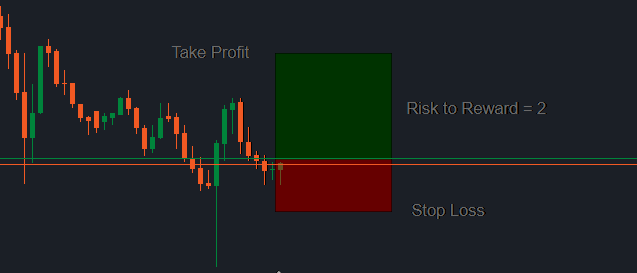
The ratio comparing your trade risk (distance to stop-loss) against potential profit (distance to take-profit target). At a 1:2 ratio, you aim to gain twice what you risk, allowing you to remain profitable overall even with a win rate below 50%.
7. Volume
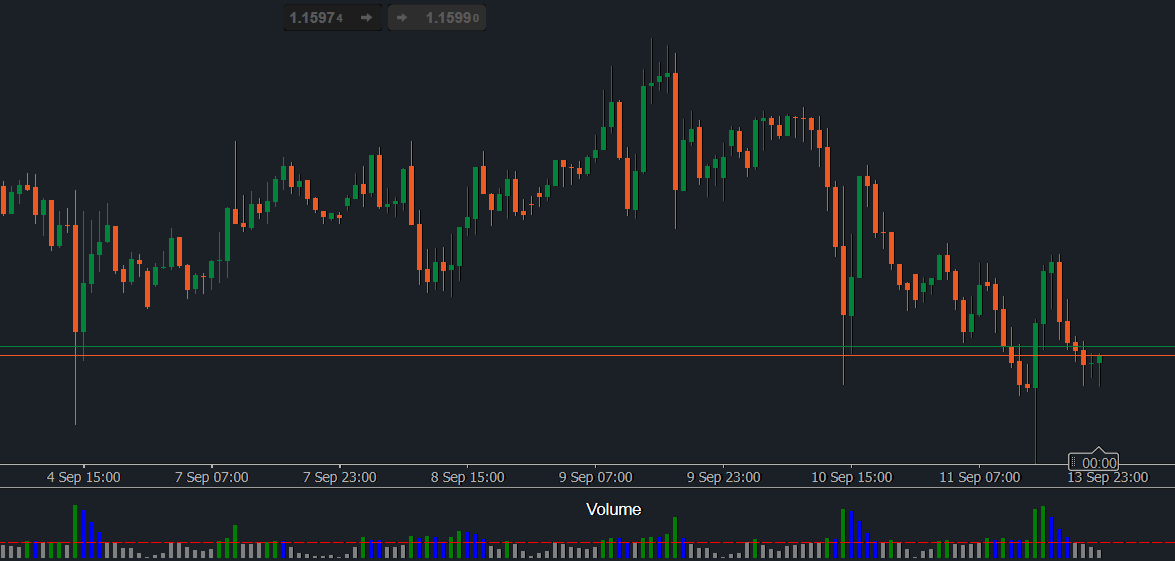
Volume measures trading activity of an instrument over a given timeframe. High volume indicates strong institutional participation, confirming trend strength or breakout validity; low volume can signal false price moves.
8. Economic Calendar & Macro Factors
Financial markets react rapidly to macroeconomic releases and data updates:
- Inflation (CPI/PCE): Measures general price inflation; high inflation often forces central banks to raise interest rates.
- Central Banks: Interest rate decisions by entities such as the Fed or ECB are primary drivers of long-term currency trends.
- Employment Data: Reports like US Non-Farm Payrolls (NFP) reflect economic health and trigger extreme short-term volatility.
- Purchasing Managers' Index (PMI): Gauges economic activity across manufacturing and services sectors (above 50 = expansion, below 50 = contraction).
- Consumer Sentiment: Indicates overall consumer confidence regarding economic stability and spending outlook.
- Commodity Reports: Inventory data (e.g., crude oil inventories) that directly impact commodity price movements.
9. Types of Market Participants
- Retail Traders: Individual investors trading personal capital through online retail brokerages.
- Institutional Traders: Entities such as hedge funds and commercial banks driving major trends with large capital reserves.
- Algorithmic / HFT Traders: Automated computer systems executing rapid transactions based on quantitative models.
10. Mathematical Asymmetry & Surviving Losing Streaks
Trading drawdowns do not scale linearly; they scale exponentially. The larger your percentage loss, the disproportionately higher the gain required simply to return to break-even:
- -5% loss → +5.3% required to recover (easily manageable)
- -10% loss → +11.1% required to recover (manageable)
- -20% loss → +25.0% required to recover (increasingly difficult)
- -50% loss → +100.0% required to recover (you must double your capital!)
- -80% loss → +400.0% required to recover (practically impossible)
If you risk 5% per trade and hit a normal 10-trade losing streak (a statistical certainty over time in any system), you lose **50% of your account**. Conversely, if you risk only **1% per trade**, a 10-trade loss streak results in a manageable **~9.5% drawdown** (due to compounding). Even elite traders with a 60% win rate experience streaks of 6 to 12 consecutive losses; proper position sizing is the only defense to survive them.
11. Psychology: Preventing Revenge Trading
Losing 5% or 10% on a single position triggers a fight-or-flight psychological response. The urge to immediately open a larger position to recover losses (revenge trading) is emotionally overwhelming. This is the primary cause of account blow-outs within days. With strict 1% risk management, an individual loss feels minor, allowing you to remain emotionally neutral and execute strictly according to your plan.